


Mobile Legends: Adventure-idle
4.0307.00 Reviews
App Specs
- Version
- 1.1.684
- Updated On
- License
- Free
- Downloads
- 10,000+
- Developer
- Skystone Games Pte. Ltd.
- Categories
- Role Playing
- Platform
- Android
Screenshots


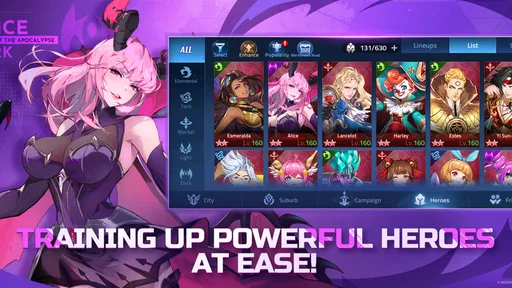

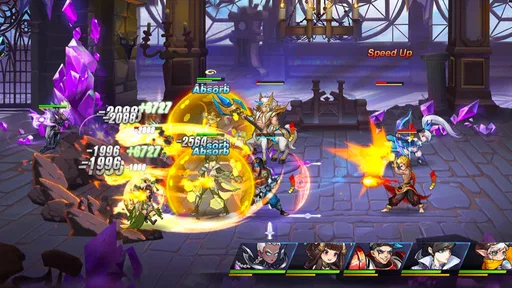


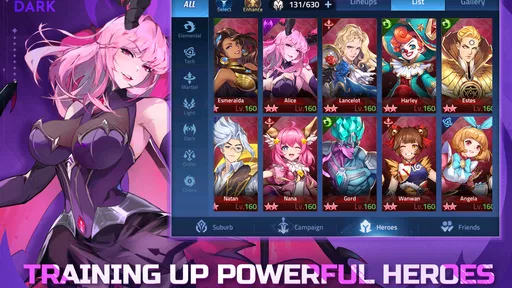
 Analysis by AppCompare
Mobile Legends: Adventure-idle is a role-playing game from Skystone Games Pte. Ltd. that takes a familiar mobile fantasy idea and makes it work around short check-ins rather than long sessions. I spent time treating it as a game for real daily use: opening it when I had a few spare minutes, checking what had accumulated, adjusting my lineup, and deciding whether another battle was worth my attention. That rhythm is the main appeal. You are not expected to control every second of a fight, but you are still asked to make meaningful choices about which heroes belong together.
The game is free to start, carries a Teen content rating, and supports Android devices running at least version 6.0. Its current version is 1.1.684, while the game itself was released on March 22, 2025. Those details matter because this is a relatively recent idle role-playing release, not an old title being quietly maintained. At the same time, its public response is still modest in scale: it has an average rating of 4.0 from around 500 ratings and has passed 10 thousand installs. I would read that as early evidence rather than a final verdict.
How the current version feels to play
I find the current version easiest to enjoy when I treat each visit as a small planning session, not a demand to keep playing. I check what the team needs before spending rewards, then use the next battle as a practical test of that choice. That routine makes the game’s automatic fights more informative and helps me decide whether its steady pace still feels rewarding.
A role-playing game built around decisions between battles
The central loop is easy to understand. Heroes fight, rewards accumulate, and I return to use those resources to strengthen a team. The interesting part is not manual combat; it is the preparation before combat. I have to think about the shape of my lineup, which characters deserve investment, and whether a short-term improvement is worth spending resources that might help a more important hero later.
That makes the game a comfortable fit for someone who likes progression but does not want a demanding action game. I can check it during a commute, between tasks, or at the end of the day without needing a long uninterrupted block of time. A realistic routine would be opening the game after work, collecting the rewards that built up while I was away, making one or two lineup changes, and then leaving it until the next convenient moment.
The trade-off is clear: the game gives me less direct control than a traditional role-playing adventure. If you enjoy steering a character through every encounter, timing attacks, or exploring a large world at your own pace, the idle structure may feel too passive. Here, the satisfaction comes from improving the plan rather than personally executing each move.
Why the lineup matters more than simply collecting heroes
It is tempting to treat a collection-based game as a race to obtain the most impressive characters. In practice, I found that a lineup is more useful when I think about how its members work together. A hero who looks powerful alone may not solve a weakness in the rest of the team, while a less exciting addition can make the whole group more reliable.
Worth Reading Before You Choose

Flipboard Shows What News Apps Must Do Beyond the Feed

Switching to Android Auto Means Rethinking Your Driving Routine

Google Calendar Makes a Crowded Week Easier to Manage

Ludo King Makes the Most of the Minutes Between Plans

Baby Panda World Brings Quick Play to Modern Phones, but Its Game Library Feels Busy

ESPN’s Live Game View Makes Following Close Games Easier
My practical advice is to avoid spending every resource the moment it appears. First, look at the team as a complete unit. If your frontline collapses quickly, adding another damage dealer may not fix the problem. If battles last too long, improving survivability again and again may be less helpful than finding a way to raise the group’s pressure. This simple habit prevents the common idle-game mistake of upgrading randomly and then wondering why progress has stalled.
I also recommend testing a change rather than judging it from a character’s description alone. When a stage becomes difficult, replace one member at a time and observe what actually improves: survival, speed, or consistency. That approach turns the automatic battles into useful feedback. You may not control the fight directly, but you can still learn from the result.
The value of idle rewards in everyday play
Idle rewards make the game forgiving when life gets busy. Missing a session does not necessarily mean missing all progress, because the game is designed around returning to accumulated resources. I like that structure for a phone game: it gives me a reason to come back without making every day feel like an obligation.
There is a subtle difference between using idle rewards well and simply collecting them. I get more value when I collect at a sensible stopping point, then immediately connect the rewards to a plan. That might mean improving the hero who is holding back the lineup, preparing a replacement for a weak role, or saving materials for a more meaningful upgrade. If I spend everything without a goal, the reward screen feels busy but my progress becomes harder to understand.
This is also where the game can lose players. The first few returns may feel productive because almost any upgrade helps. Later, the pace can feel less satisfying if the next improvement requires patience or more careful resource management. Players who need constant new action may prefer a conventional role-playing game with active quests and direct combat.
What the recent release context tells me
The March 2025 release and the current 1.1.684 version suggest a product that is still in an early stage of its life. I would not assume that the present balance, interface, or progression curve is permanent. A newer game can improve quickly, but it can also feel less settled than a long-established alternative with years of refinement behind it.
For me, that makes the current version worth approaching with the right expectations. I can enjoy what is available now, but I would not choose it solely because I expect a particular future feature or a guaranteed direction. The sensible approach is to judge the present loop: does collecting rewards, arranging heroes, and checking progress feel satisfying today?
How the version affects someone already playing
For an existing player, a version number is most useful as a marker for keeping the app current, not as proof that every part of the experience has changed dramatically. I would update before judging performance or progression, especially with a recently released game. Staying on the current version reduces the chance that my experience reflects an older build rather than the one most players are using now.
It is also wise to reassess a lineup after an update instead of assuming yesterday’s arrangement remains ideal. Even a small balance adjustment can change which hero fills a role most effectively. I would compare results over several battles rather than rebuilding the entire team after one disappointing attempt. That protects scarce resources and makes it easier to tell a genuine improvement from ordinary battle variation.
Free entry, but a paid layer to consider carefully
The free entry point is one of the strongest reasons to try Mobile Legends: Adventure-idle. I can install it without paying and decide whether the idle rhythm suits me before spending anything. That is especially useful for newcomers who are unsure whether they want a collection-focused role-playing game or a more active alternative.
There are in-app purchases ranging from $0.99 to $99.99 per item. The wide range is important because it means the game should be approached with a personal spending limit, not with the assumption that every offer is harmless. I would play for a while before buying anything, identify the exact bottleneck I want to solve, and avoid purchasing simply because a reward screen creates urgency.
For a friend trying it, my rule would be simple: treat purchases as optional convenience, never as part of the basic installation decision. If the free progression already feels too slow or the collection pressure is uncomfortable, paying more may not solve the underlying problem. Someone who dislikes monetized progression should skip this game and choose a premium role-playing title or a game with a clearer one-time purchase model instead.
Who will get the most from this game
I think it suits players who enjoy building teams, comparing possible combinations, and watching a roster become stronger over repeated visits. It is particularly convenient for people who play on a phone in small windows of time. The automatic structure means I do not have to reserve an entire evening, and the lineup decisions give those short visits a purpose.
It may also work for someone returning to mobile games after a break. The basic loop is approachable, and the game does not demand that I master complicated controls before I can begin. I can start with a simple formation, notice what fails, and gradually become more deliberate about roles and upgrades.
I would be more cautious recommending it to players who want a story-heavy role-playing experience, deep exploration, or precise combat mechanics. The game’s identity is tied to its idle format. If automatic battles feel like a compromise rather than a convenience, the main feature becomes the main frustration.
Three habits that make progression less wasteful
First, I separate “strongest hero available” from “best next upgrade.” A newly obtained character may be exciting, but replacing a well-developed team member immediately can weaken the group if the newcomer lacks support. I prefer to compare the complete lineup and change one variable at a time.
Second, I use difficult stages as diagnosis rather than as a signal to spend. If the same problem appears repeatedly, I ask whether the issue is damage, durability, or poor balance between the two. This keeps me from throwing resources at whichever character happens to be highlighted by the interface.
Third, I make idle collection part of a short routine. I collect, inspect the biggest available improvement, apply it only if it supports the team’s current need, and then test the lineup. That is more effective than opening the game repeatedly just to tap through rewards. It also helps me notice whether the game is still enjoyable or has become a chore.
Where it still feels limited
The biggest limitation is the reduced sense of direct participation. Automatic combat can be relaxing, but it can also make a victory feel distant from my actions. My decisions happen before the battle, and the result may not always explain itself clearly enough. Players who want moment-to-moment agency should know this before downloading.
Another limitation is the tension between collecting and committing. A roster-based game naturally encourages experimentation, but resources are easier to appreciate when they are focused. New players may spread upgrades across too many heroes and then find that no lineup is developed enough to handle harder content comfortably. The solution is not to collect less; it is to decide which group is the current priority.
The Teen rating is another reason to consider whether the audience is appropriate. Parents should review the game themselves before allowing a younger player to use it, especially because the title includes optional purchases. For adults, the rating is a straightforward reminder that this is not necessarily designed as a children’s-only idle game.
How it compares with other mobile role-playing choices
Compared with an action role-playing game, this title asks for less dexterity and more patience. I do not need to learn a control scheme or react quickly, but I also lose the satisfaction of personally turning a difficult fight around. Compared with a traditional turn-based game, it offers a lighter commitment: I spend more time preparing a team and less time selecting every command.
Compared with other idle role-playing games, its strongest distinction is the balance between passive rewards and lineup planning. That combination is appealing if I want progress to continue while I am away but still want decisions to matter when I return. It is less appealing if I expect every login to reveal a new activity or a major story moment.
The best alternative depends on what I value. I would choose a more active game for combat control, a premium game for a cleaner relationship with spending, and a story-led role-playing title for narrative depth. I would choose this one when the priority is a manageable daily loop built around heroes and team construction.
What I would watch before committing long term
Because the game is still relatively new and currently sits at around a 4.0 average rating, I would pay attention to how the experience develops rather than treating early reactions as definitive. The number of ratings is enough to show that other players are trying it, but not so large that one conclusion should be considered settled. I would personally watch for whether future updates make progression clearer, keep lineup choices meaningful, and maintain a fair balance between free play and purchases.
I would also watch my own behavior. If I begin opening the game only to collect rewards without enjoying the team decisions, the idle loop has stopped working for me. If I look forward to testing a new formation or solving a difficult stage with better preparation, then the game is earning its place on my phone.
My recommendation after playing it
Mobile Legends: Adventure-idle is a sensible free starting point for players who like role-playing collections but need a game that fits around ordinary life. The automatic battles are not a weakness for the right audience; they are the reason to play. I enjoy the way a short visit can still involve a useful decision, especially when I resist random upgrades and build toward a clear team goal.
I would recommend trying it without spending first. Give the lineup system enough time to show whether its decisions interest you, and set a purchase boundary before the optional offers become part of your routine. If you want direct combat, a large narrative adventure, or a one-time-purchase experience, this is probably not the right choice. If you want a low-pressure hero game that turns brief check-ins into gradual progress, Mobile Legends: Adventure-idle is worth a look.
My final view is cautiously positive. The current version presents a clear and accessible idle role-playing foundation, while its recent release means I would judge it on the experience available now rather than on promises about what may come later. The most important question is simple: do you enjoy improving a team more than controlling a battle? If the answer is yes, this game has a good chance of fitting into your daily routine.
Pros
- Heroes continue earning rewards while you are offline.
- Simple auto-battle system makes progress easy for casual players.
- Large roster offers many team-building combinations.
- Frequent events provide extra resources and limited-time rewards.
- Portrait orientation works well for quick one-handed sessions.
Cons
- Progress can slow considerably without regular resource upgrades.
- Duplicate heroes are often needed to unlock higher potential.
- Many menus and currencies may feel overwhelming for new players.
- Competitive modes can favor players who spend on premium packs.
- Requires an internet connection for most gameplay features.
FAQs for Mobile Legends: Adventure-idle
What is Mobile Legends: Adventure-idle?
Mobile Legends: Adventure-idle is an idle role-playing game set in the Mobile Legends universe. You collect familiar heroes, build teams, upgrade equipment, and send your squad into automated battles. Progress continues while you are away, allowing you to claim rewards later. The game combines campaign stages, hero development, events, and competitive modes in a mobile-friendly format.
Is Mobile Legends: Adventure-idle free to download and play?
Yes, Mobile Legends: Adventure-idle can be downloaded and played for free, but it includes optional in-app purchases. These purchases may provide premium currency, summoning opportunities, upgrade materials, or special bundles. Free players can still make progress through daily activities and accumulated idle rewards, although advancing quickly or obtaining certain heroes may require more patience.
Does the game require an internet connection?
An internet connection is generally required for Mobile Legends: Adventure-idle because the game synchronizes progress, delivers idle rewards, loads events, and connects to online features. You should expect to play while connected to Wi-Fi or mobile data. Network quality can affect loading times, account synchronization, and access to time-limited activities or multiplayer-related content.
Is Mobile Legends: Adventure-idle suitable for beginners?
The game is fairly approachable for beginners because battles are largely automated and the early stages provide tutorials, starter rewards, and guidance for upgrading heroes. However, the number of currencies, equipment types, factions, and team combinations can feel overwhelming at first. New players should avoid spending resources randomly and focus on developing a balanced core team.
Can I play Mobile Legends: Adventure-idle without spending money?
Yes, it is possible to enjoy Mobile Legends: Adventure-idle without spending money, especially if you log in regularly, complete quests, participate in events, and manage resources carefully. Nevertheless, the game uses gacha-style hero summoning and progression systems, so paid players may advance faster. Free players should expect slower collection and upgrades as content becomes more demanding.


